
Ishigaki Wall & Accessible Pathway
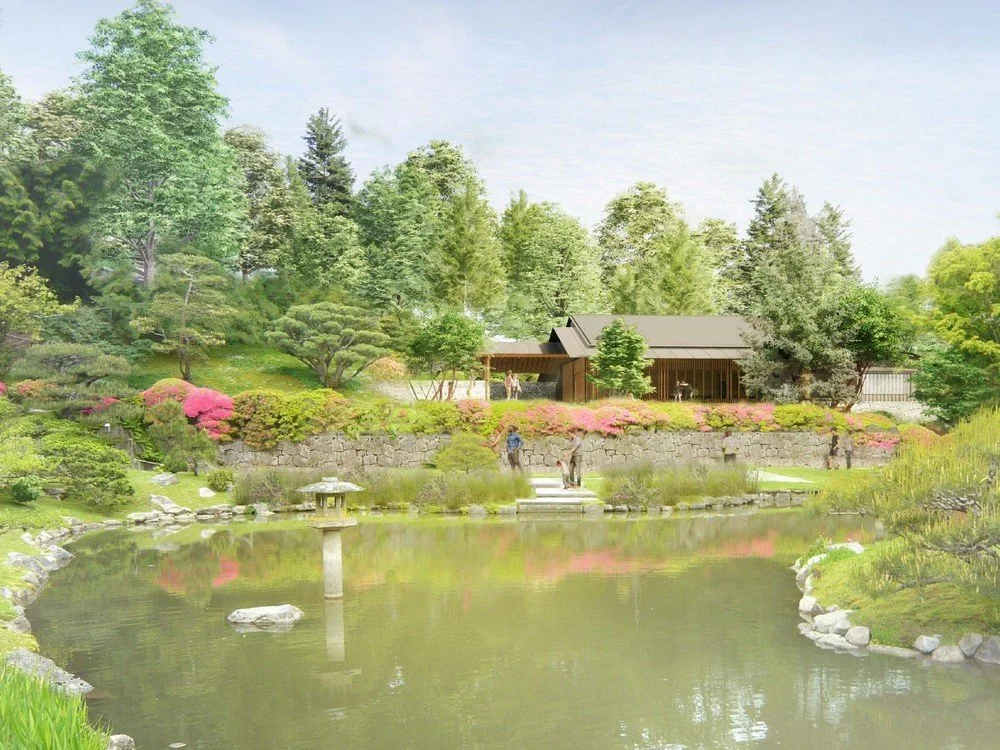
Rendering of the Ishigaki Wall, with future viewing pavilion in the background (courtesy Berger Partnership/Hoshide Wanzer).
Seattle Japanese Garden will be closed June 22-July 26, 2026, as we begin demolition for a once-in-a-century renewal project of our ishigaki or stone wall at the north end of the Garden.
Please check this page and our main Visiting the Garden information before your visit for the latest schedule and any last‑minute changes.
Upon reopening July 27, construction will enter a new phase with 15th generation master stone mason Suminori Awata leading a team of artisans from Japan and America in the laborious task of building the wall stone-by-stone using only traditional tools.
About the Project
For more than six decades, the Seattle Japanese Garden has been cared for through meticulous pruning, stonework, weeding and sweeping through seasonal change—what we call the art of maintenance. This work is never finished; each generation inherits the responsibility to renew the Garden while honoring its original design and spirit.
We invite you to witness our commitment to stewardship in action this summer as the Ishigaki Wall & Accessible Pathway project unfolds. Stonemasons from Japan, teamed with American artisans, will rebuild our deteriorating North Wall, preserving both the Garden’s landscape and a rare craft that has been handed down over centuries. At the same time, we are reshaping paths so that more people—using wheelchairs, strollers, or walkers—can safely experience the beauty of the renewed shoreline.
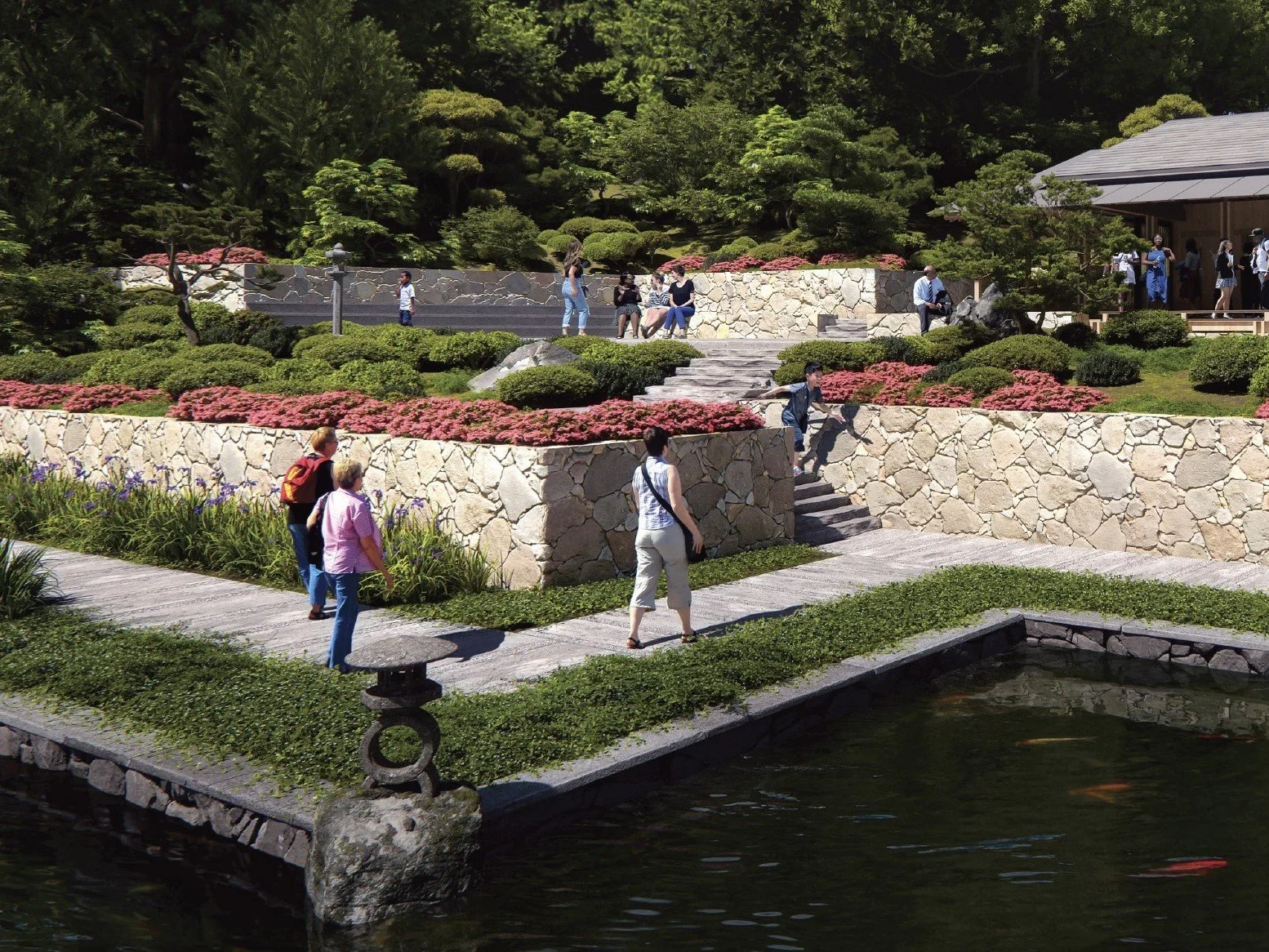
Rendering of the Ishigaki Wall, with future viewing pavilion in the background (courtesy Berger Partnership/Hoshide Wanzer).
Project Details
The ishigaki stone rampart wall will be created by Suminori Awata, one of the last remaining stonemasons of his 15-generation lineage, with support from U.S.-based artisans.
As a crucial part of this project, the nearby walkways will be regraded and built to be accessible, allowing the Garden to become even more inclusive and restorative to the 100,000 guests visiting annually from our local communities and across the globe.
About the Stonemasonry Tradition
Anoshu is a lineage of stonemasonry that dates back fifteen generations. Throughout its history, the teaching has relied on oral transmission and physical practice. Each Ishigaki built is formed with large granite boulders that are split and shaped by hand into foundational cornerstones. Stones of varied sizes and shape top the cornerstones, with ballast stones filling the gaps instead of mortar.
Mr. Awata directs the precise placement of each stone, describing his approach as “listening to the stones and putting them where they want to go.” These walls are earthquake-resistant and designed to stand for centuries.
Project Partners
Seattle Parks and Recreation and the Arboretum Foundation worked with Hoshide Wanzer Architects and Berger Partnership to complete a schematic design for the entire north section of the Garden, ensuring that the rebuilt walls will dovetail with future plans for a pavilion and its surrounding landscape—and the path leading to this section of the Garden is accessible to all.
Honoring the Legacy of Richard “Dick” Yamasaki
The Seattle Japanese Garden as we know it today is rooted in the collaboration between designer Juki Iida and Seattle‑born nisei gardener Richard “Dick” Yamasaki. For decades, Yamasaki’s guided the seasonal care to align with the design intent, and his instruction guides gardeners here to this day.
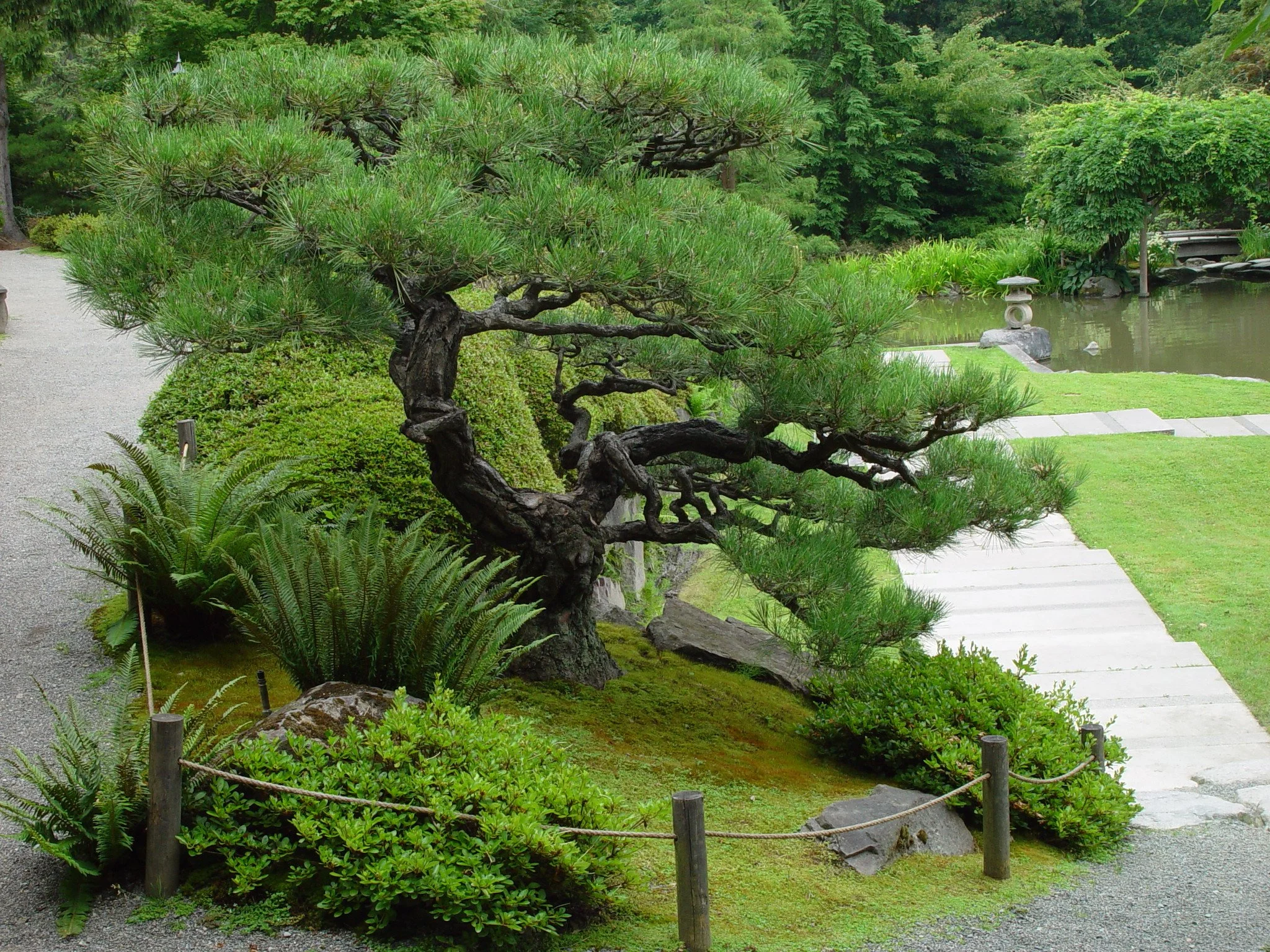
The venerable century‑old black pine that Yamasaki donated—a survivor of his family’s forced incarceration during World War II—will be carefully incorporated the new stone wall, linking the Garden’s past to its renewed shoreline. By honoring this tree and the site around it, the Ishigaki Wall & Accessible Path project recognizes the vision, labor, and sacrifices of nisei gardeners and community members whose hands built and sustained the Garden, connecting their legacy to the future we are creating now.
Project Partners and Lead Donors
This project is made possible through a strong partnership and the generosity of lead supporters.




We extend our heartfelt thanks to the donors whose leadership gifts are bringing this project to life.
Aldarra Foundation - Steve & Peggy Garber - Bill & Virginia Goldberg - Japanese Garden Society - Norcliffe Foundation - Doug & Noriko Palmer - Suzanne Ragen - Steve Alley & Amy Scott - Patti & Michael Brawer – Larry Hubbell & Shelley Butler - Gail & Ron Irving – Susie Marglin - Keiko Minami - Maribeth O’Connor & Chuck Nordhoff - Cam & Tori Ragen – John Reed & Karen Overstreet