
Ishigaki Wall & Accessible Pathway
The Seattle Japanese Garden is undergoing a rare, historic improvement project. The $2.8 million investment will replace the Garden’s deteriorating stone wall and add an accessible looped walkway so that more people—using wheelchairs, strollers, or walkers—can safely experience the beauty of the renewed shoreline.
The ishigaki wall was completed on September 10. On Monday September 14 we bid farewell to 15th generation master stonemason Suminori Awata and a majority of the crew from Green Man Builders who helped construct the wall. From here, project lead Kyle Schlagenhauf of Green Man Builders will lead the remaining members of the crew in the construction of a new accessible pathway on the north end of our central pond, similar to the rendering to right. Guests are invited to visit the Garden throughout the 2026 season to witness this unique process as the wall takes shape.
We extend deep gratitude to donors who invested in this important project.
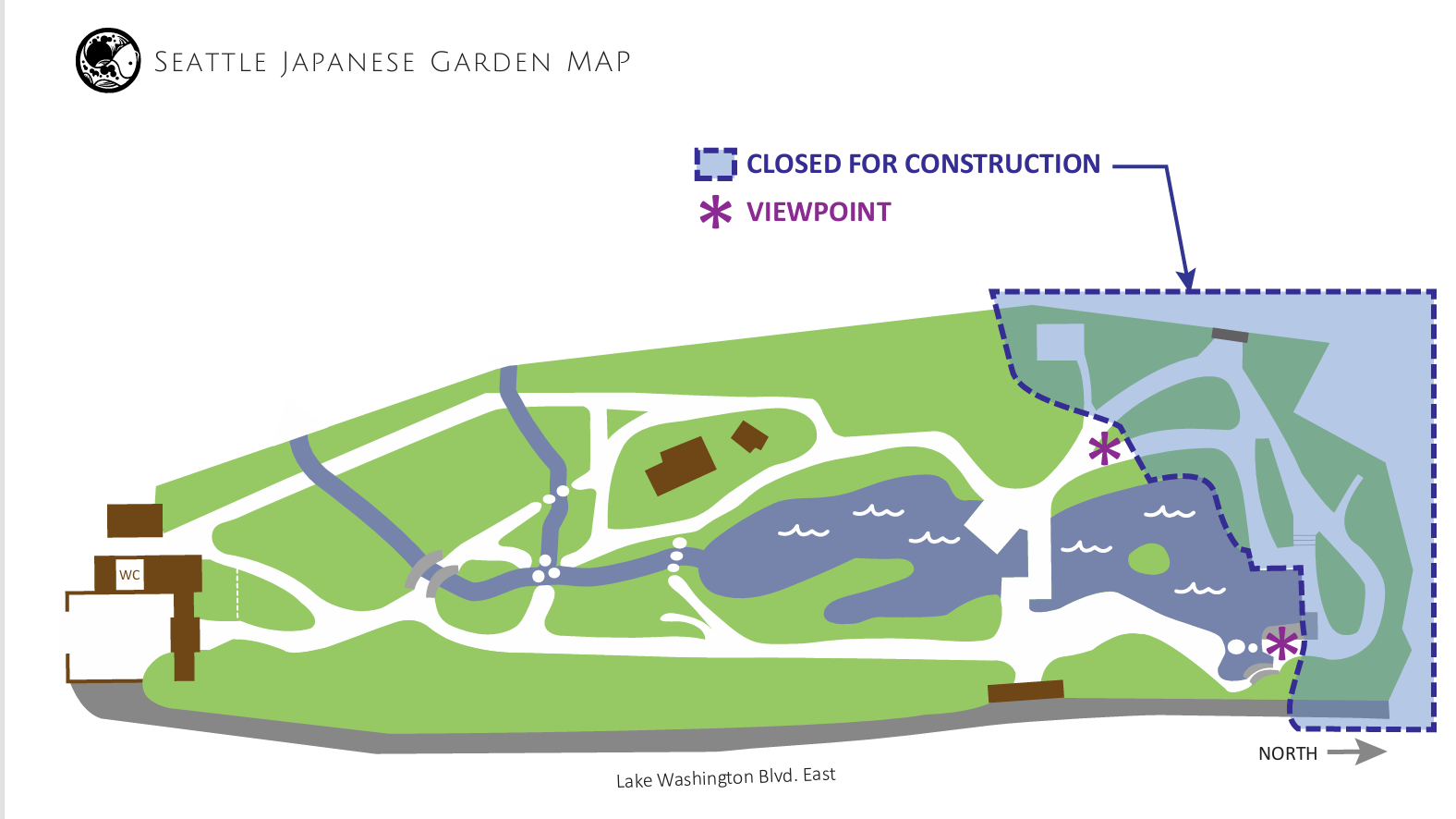
For more information and to plan your visit, please see our closure map and detailed FAQ below. See photos of the wall construction here.
Visiting the Garden While Work Is Underway
The Garden is partially open during construction for visitors wishing to enjoy part of the Garden or track our progress. While we’re very excited to improve the Garden with a new wall and accessible pathway, we understand that closures are inconvenient and construction can be disruptive. Visitors looking for a quiet, contemplative Japanese garden experience may find refuge in the southern portions of the Garden, and we expect noise from the construction that will impact your visit.
About the Project
For more than six decades, the Seattle Japanese Garden has been cared for through meticulous pruning, stonework, weeding and sweeping through seasonal change—what we call the art of maintenance. This work is never finished; each generation inherits the responsibility to renew the Garden while honoring its original design and spirit.
We invite you to witness our commitment to stewardship in action this summer as the Ishigaki Wall & Accessible Pathway project unfolds. Stonemasons from Japan, teamed with American artisans, will rebuild our deteriorating North Wall, preserving both the Garden’s landscape and a rare craft that has been handed down over centuries. At the same time, we are reshaping paths so that more people—using wheelchairs, strollers, or walkers—can safely experience the beauty of the renewed shoreline.
As a crucial part of this project, the nearby walkways will be re-graded and built to be accessible, allowing the Garden to become even more inclusive and restorative to the 100,000 guests visiting annually from our local communities and across the globe.
Closure Map
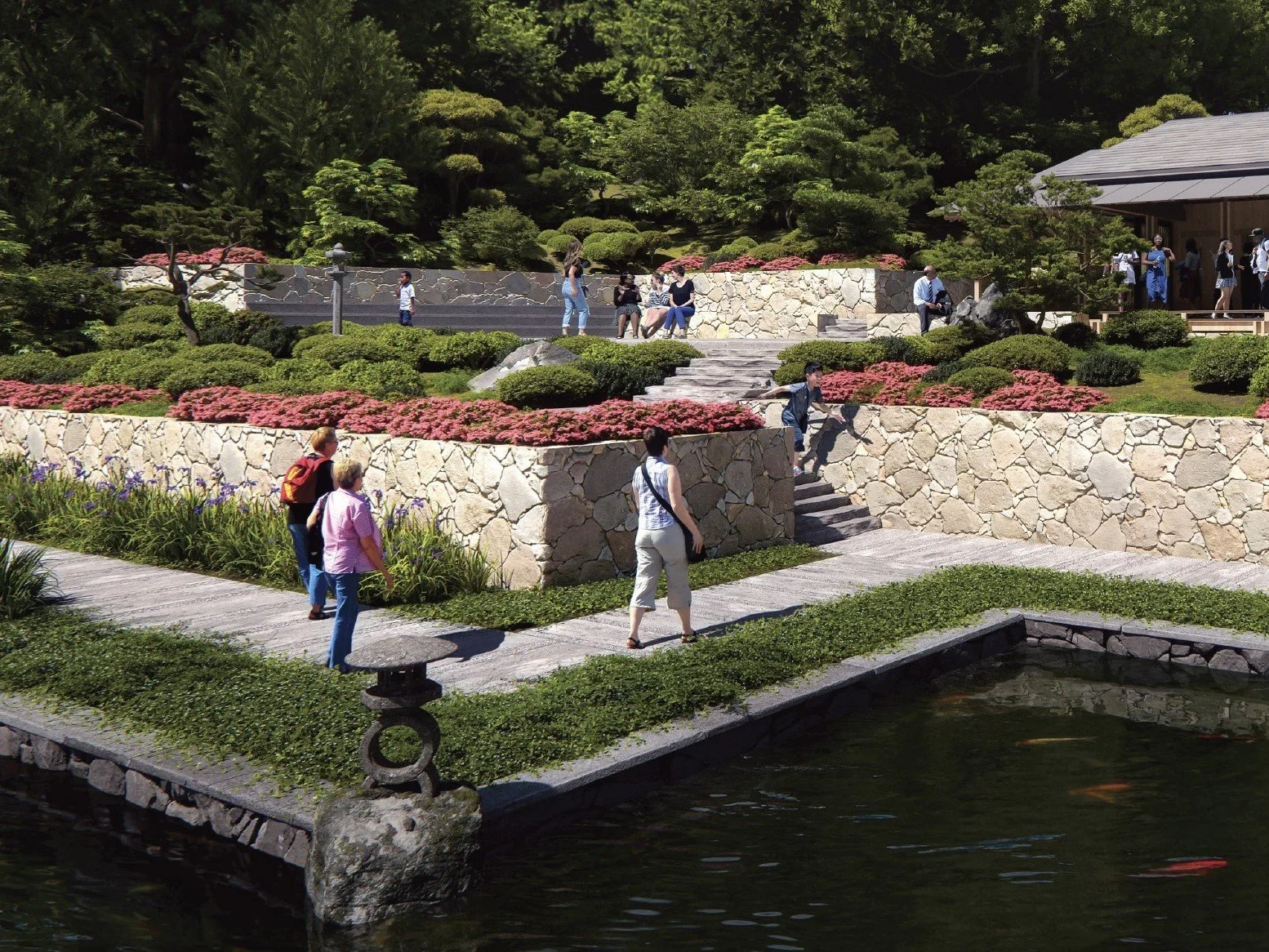
Rendering of the ishigaki (stone wall), with future viewing pavilion in the background (courtesy Berger Partnership/Hoshide Wanzer).
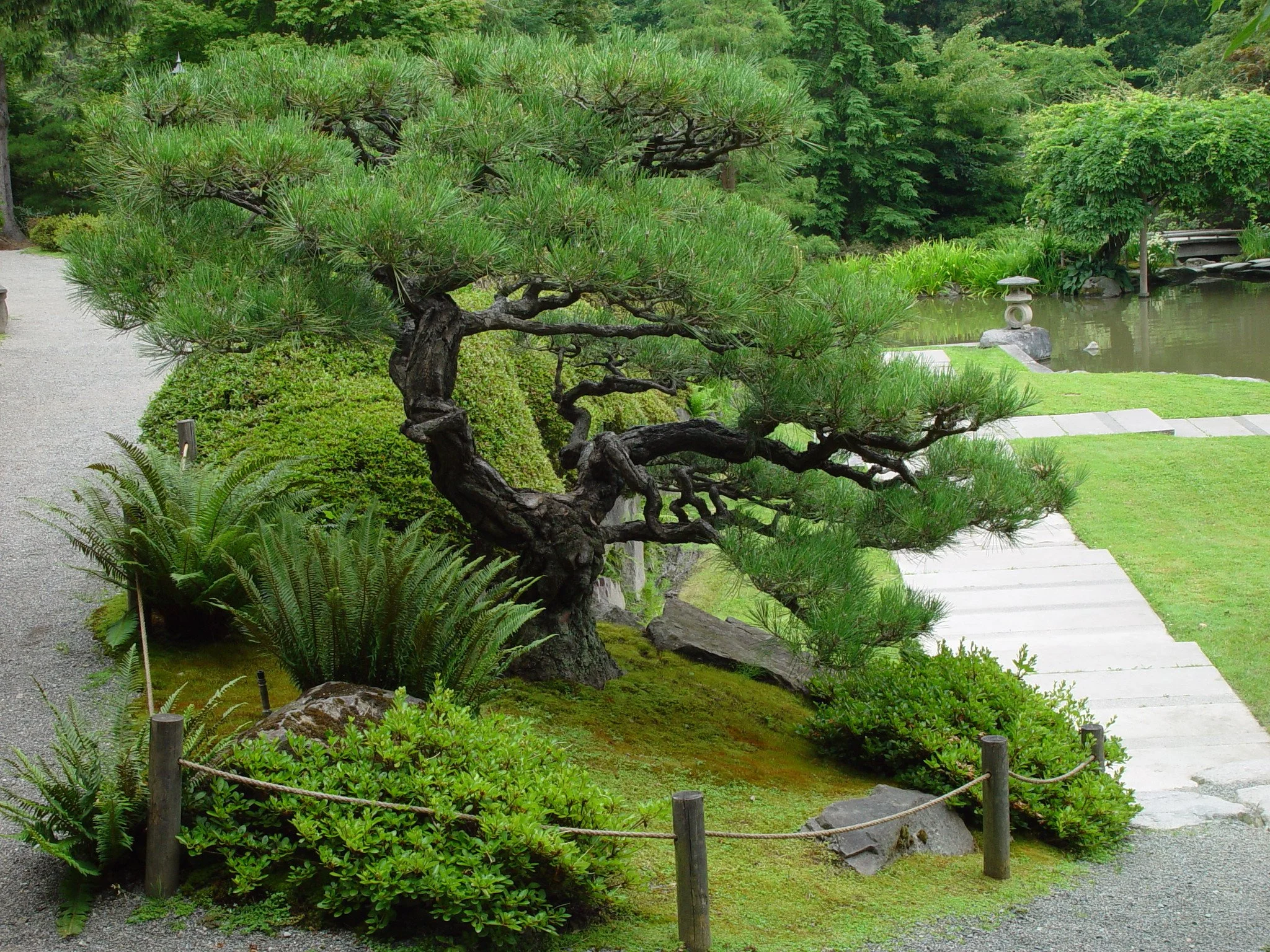
The Yamasaki Pine at the north end of the Garden. Photo by Seattle Parks and Recreation.
FAQ:
-
The Seattle Japanese Garden is now open in Phase 2 of our ishigaki wall & Accessible Pathway project — a $2.8 million improvement to replace the Garden’s deteriorating retaining wall and add an accessible looped walkway at the north end of the pond.
The ishigaki (stone walls) will be built by Suminori Awata, one of the last remaining stonemasons of a 15-generation lineage specializing in traditional Japanese dry-stone walls—built without mortar—designed for stability, durability, and earthquake resilience in castle foundations, temples, and gardens. These walls stand for centuries. The accessible pathway will allow wheelchair users and stroller-pushing families to enjoy the shoreline area for the first time. Learn more here.
-
The Garden was closed five weeks from June 22–July 27 and has reopened since July 28 until the end of season (November 29).
From late-July through the end of season, the Garden will be about 80% open, with construction closures for the ishigaki and accessible pathway construction at the north end of the Garden.
Guests are invited to visit the Garden throughout the 2026 season to witness this unique process as the wall takes shape. We will continue to update this webpage with the most current schedule.
-
Due to the nature of this work, the project is only possible in the summer. While we’re closed, we will also be completing deferred maintenance on our walkways and the dobashi bridge.
-
Yes, you can still visit for most of the summer. Except for the June 22–July 27 full closure, the Garden will be open. The most up to date schedule will be reflected on this page (above) and on our Hours & Operations page.
-
This project is made possible through a strong partnership and the generosity of lead supporters. We extend our heartfelt thanks to the donors whose leadership gifts are bringing this project to life:
Aldarra Foundation ♦ Steve & Peggy Garber ♦ Bill & Virginia Goldberg ♦ Japanese Garden Society ♦ The Norcliffe Foundation ♦ Doug & Noriko Palmer ♦ Suzanne Ragen ♦ Steve Alley & Amy Scott ♦ Patti & Michael Brawer ♦ Larry Hubbell & Shelley Butler ♦ Gail & Ron Irving ♦ Susie Marglin ♦ Keiko Minami ♦ Maribeth O’Connor & Chuck Nordhoff ♦ Cam & Tori Ragen ♦ John Reed & Karen Overstreet
-
We look forward to offering continued programming at the Seattle Japanese Garden. Learn more on our Events page.
-
For guests seeking a Japanese Garden experience, we recommend visiting our friends at Kubota Garden in south Seattle or Seike Japanese Garden in neighboring SeaTac, Washington.
For guests looking for a beautiful place to stroll, the Washington Park Arboretum is a 238-acre public park surrounding the Seattle Japanese Garden, complete with accessible pathways and numerous gardens.
-
Financial donations to the Seattle Japanese Garden supports the quiet devotion of the gardeners, artisans, and Chado practitioners who prune, set stones, mend bamboo fences, or prepare the tea house to receive guests. At the Garden, maintenance isn’t mere upkeep; it’s how cultural knowledge is passed from mentor to apprentice. Your gift helps sustain ongoing mentorship and essential materials for the next year—and for the generation of Garden stewards to come. Make a gift.
-
To learn more about this once-in-a-generation project, visit our blog. For more information, contact our Program Coordinator at jridabock@arboretumfoundation.org.