Get Caught Reading! with our Virtual Garden Book Club
Did you know that May is National Get Caught Reading Month? To celebrate, we are recommending some of our favorite books by Japanese and Japanese-American authors. These recommendations come from Seattle Japanese Garden volunteers and staff. Read along with us on Facebook, Instagram, and Twitter!
Read More
Seattle Japanese Garden backgrounds now available for video conferences!
Are you dreaming of being in the Seattle Japanese Garden during your video conferences? We are too! Now, you can live your dreams with these exciting Zoom background options, available for download.
Read More
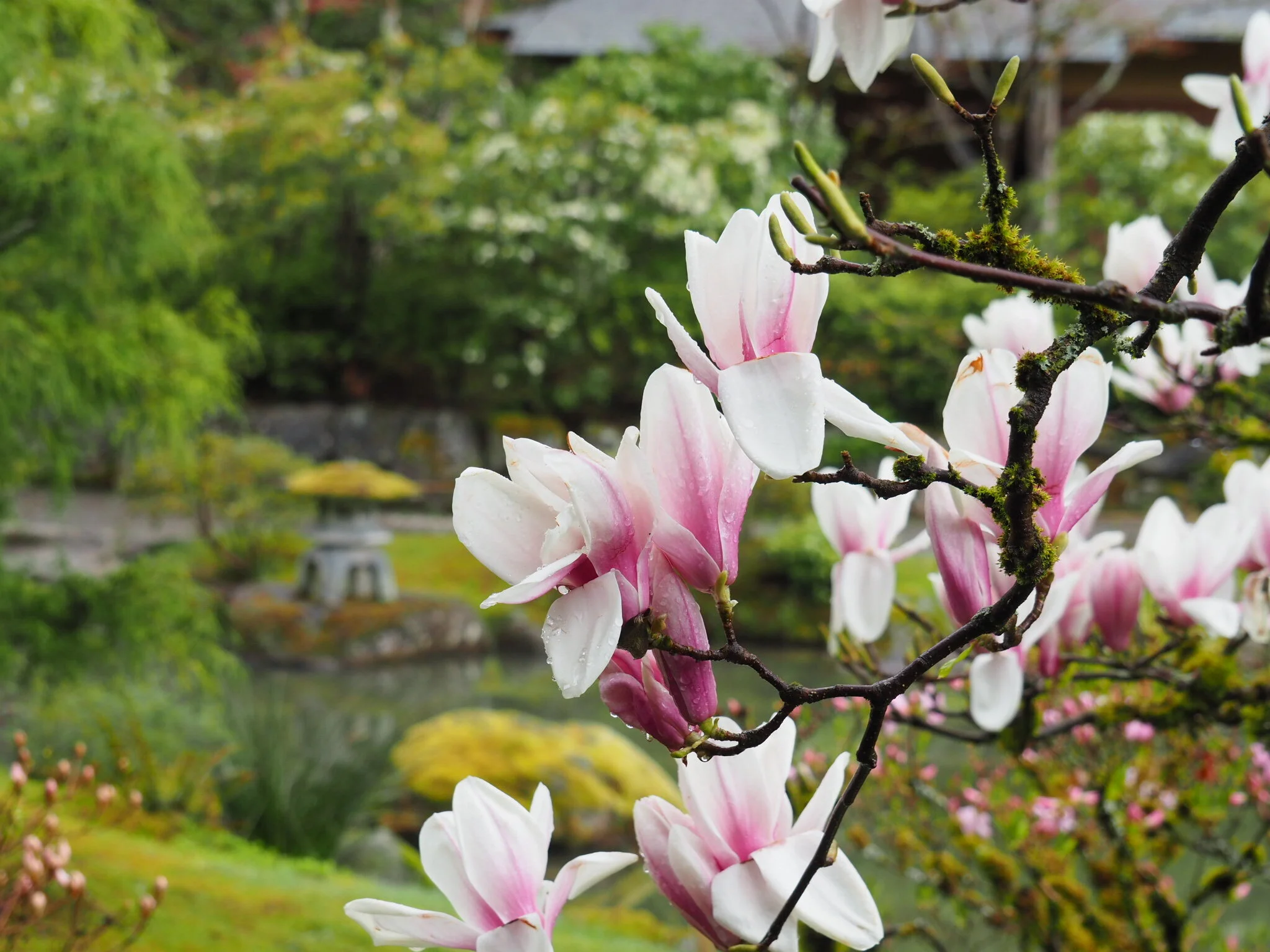
In Bloom: An Ancient Genus with Lovely Tulip-shaped Blooms
The genus Magnolia includes some of the most ancient and primitive of flowering trees and shrubs. Beloved among them is the spring-blooming saucer magnolia. When its large white and/or pink flowers open, they remind us of tulips or saucers.
Read More
Haiku in the Air - A Virtual Haiku Writing Event
To celebrate National Poetry Month, the Seattle Japanese Garden will host a virtual haiku writing event, Haiku at Home, for the month of April.
Each week, we will post a spring photograph from the garden on our Facebook page, Instagram, and Twitter. Join us by composing your original haiku to go with the photo and sharing with us!
Read More
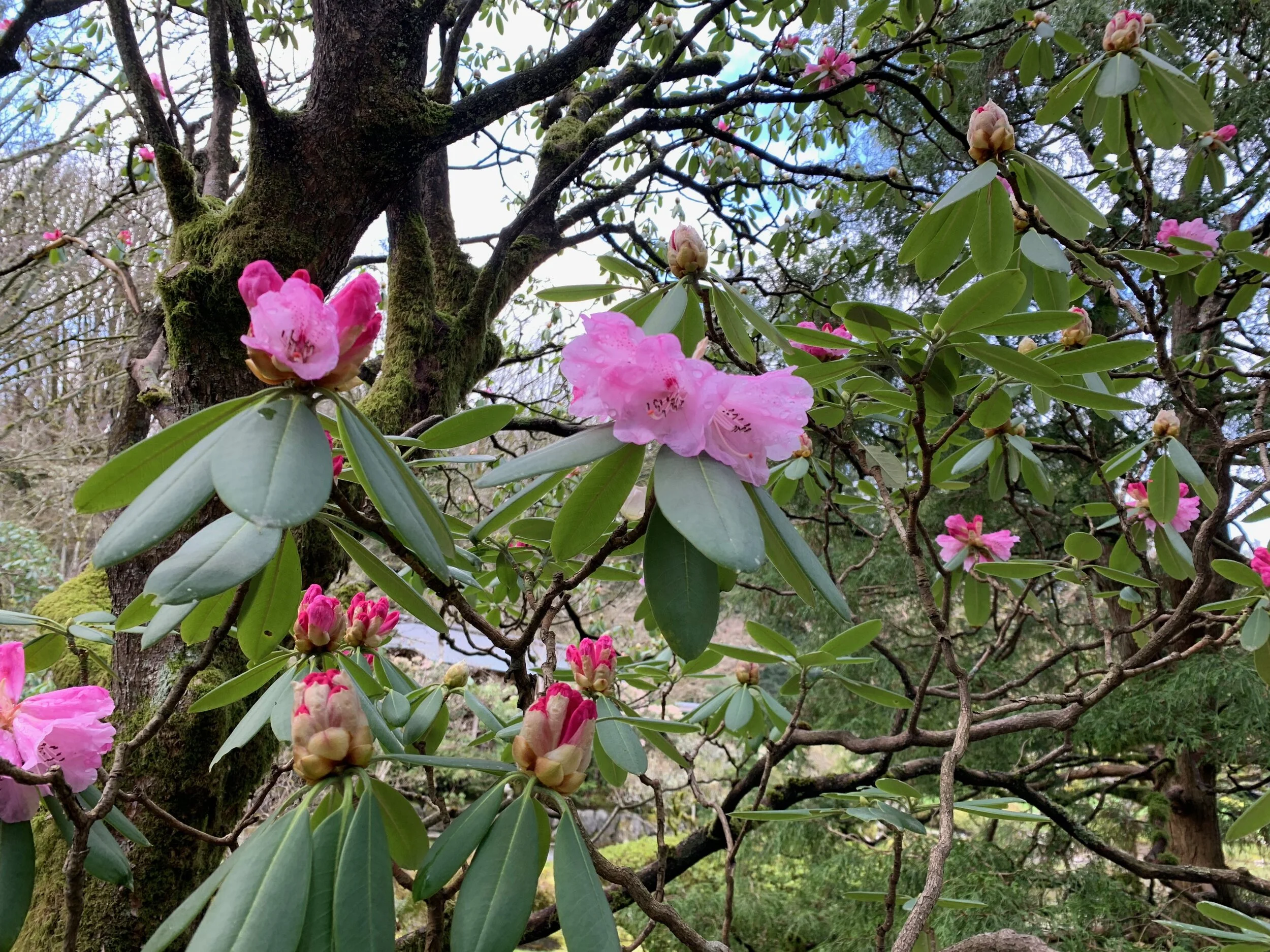
In Bloom: Rhododendron sutchuenense has early pink blooms and a majestic treelike habit
Rhododendron sutchuenense is a majestic early-blooming small tree. Its showy trusses of bell- shaped flowers, lavender-pink with red spotting, welcome us back to the garden in March.
Read More
Welcome to the 60th anniversary season of the Seattle Japanese Garden!
On June 5th, 1960, the newly-completed Seattle Japanese Garden opened to the public for the first time. Join us for a season-long series of special events and programs to celebrate the past and future of the garden. Check out our event calendar for the full schedule, but here are a few highlights!
Read More
Sakaki: The Shinto Religion’s Sacred Flowering Evergreen
Cleyera japonica is a flowering evergreen shrub or small tree viewed as sacred in Japan’s Shinto religion. Its branches have been used as offerings in Shinto rituals since ancient times.
Read More
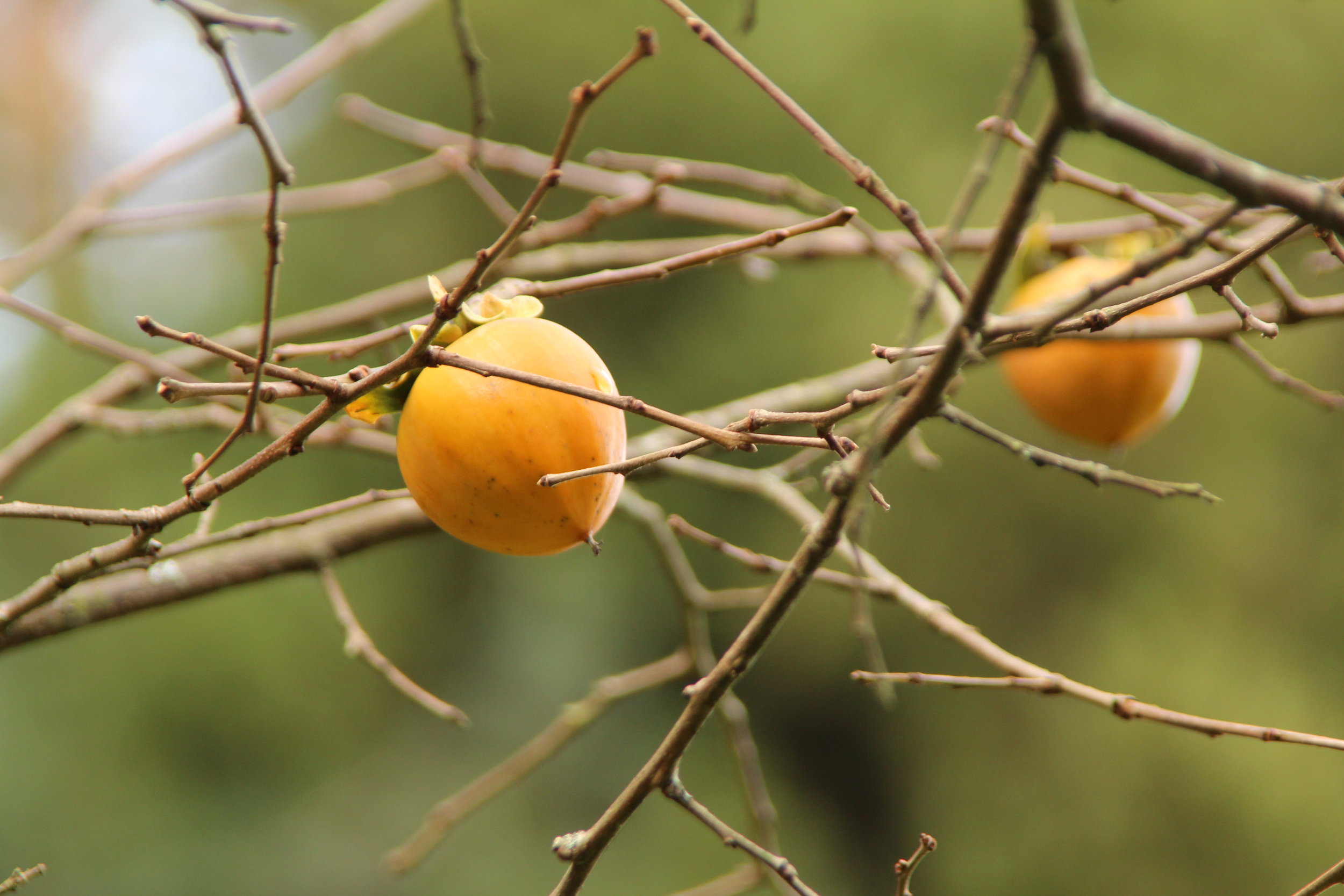
Persimmon: The Divine Fruit of Autumn
Diospyros kaki, an Asian species of persimmon, has been grown for its fruit over many centuries. It’s also an important autumn “season word” (kigo) in haiku poetry. The genus word Diospyros is derived from Greek – and means “divine fruit” or “wheat of Zeus.”
Read More