
The Essential Reading List for 2026
By Corinne Kennedy
Dokusho no Aki - 読書の秋, or “Autumn, The Season for Reading” is a common saying in Japan, and it’s a popular time of the year for all kinds of themed reading lists to be published. As the days grow colder and the nights get longer here in Seattle, books are a welcome companion. For your fall enrichment, Corinne Kennedy has compiled an eclectic list of 11 titles, including fiction and non-fiction books for children, teens and adults.
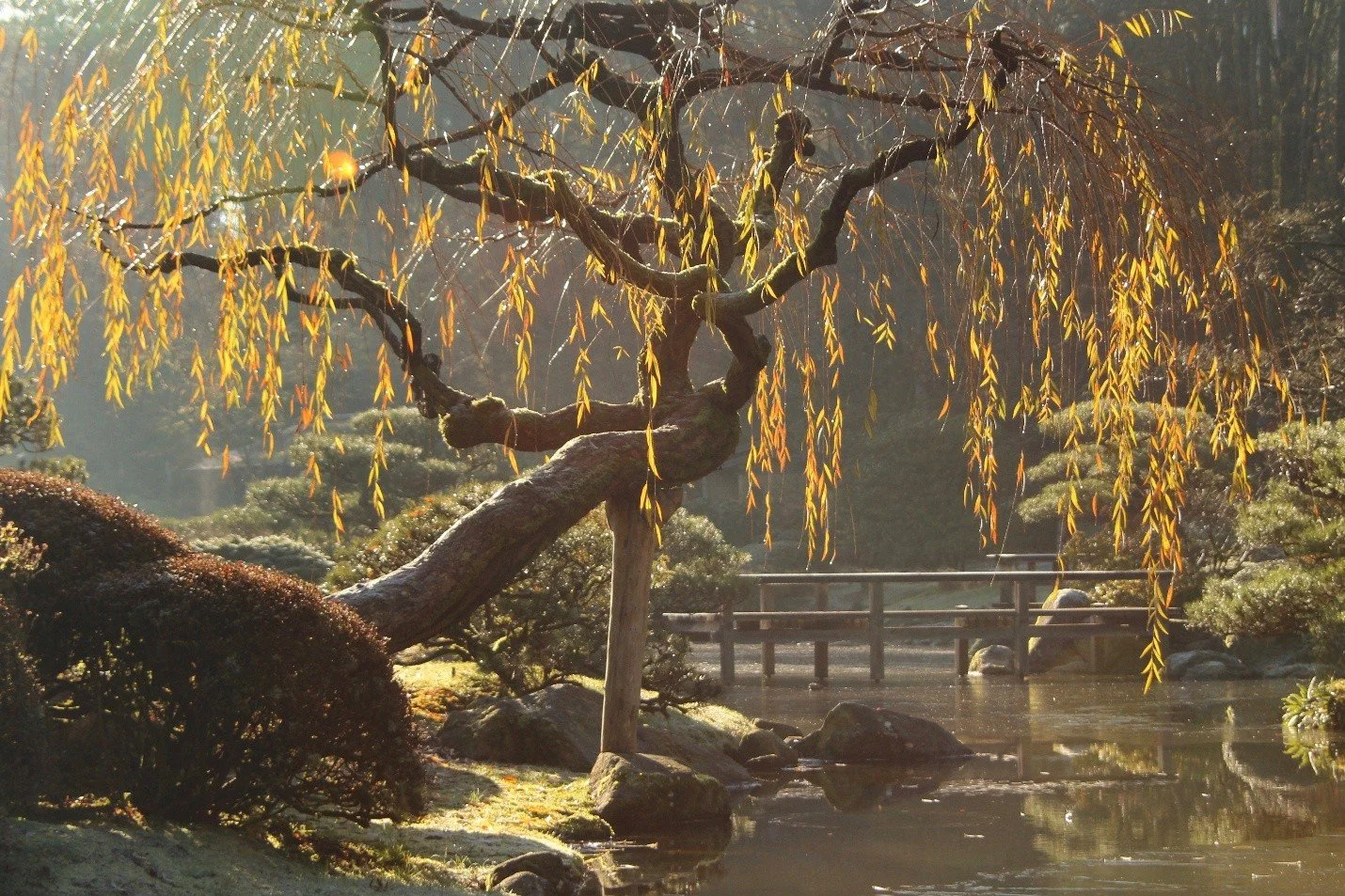
The Seattle Japanese Garden’s weeping willow, Salix babylonica, retains its colorful foliage late in the year. (photo: Mary Ann Cahill)
I continue to be amazed and inspired by the wonderful selection of children’s books at the Elisabeth C. Miller Library, where I volunteer. And I’m indebted to librarian Laura Blumhagen’s recommendations of relevant books, including some not in the Miller Library’s collection. Like my “Essential Reading Lists” beginning in 2022, this year’s article includes titles for children and teens as well as adults.
Listed here are 11 works, three translated from the original Japanese. Five are children’s picture books (one related to the incarceration of Japanese Americans during World War II), three are fiction and non-fiction books for older children and teens (two with themes related to the WWII incarceration), and three are fiction and non-fiction books for adults and mature teens. Included in the latter: a collection of short stories by a Japanese author, a handbook on how to adapt Japanese design traditions to create one’s own “Japanese-inspired” garden; and a memoir of intergenerational trauma that weaves the author’s own experiences and reflections with excerpts from her father’s unpublished manuscript about his childhood incarceration at the Tule Lake camp. Most of this year’s books are available at local public libraries; three are also available at the Miller Library (as noted by ***).
I believe that as Americans we should be aware of our history and always stand up for our Constitutional rights, which is why this year's reading list includes four books with content about the World War II incarceration of Japanese Americans—first-generation immigrants (Issei), their second-generation children (Nisei), who were American citizens, and their third-generation descendants (Sansei).
PICTURE BOOKS FOR YOUNG CHILDREN:
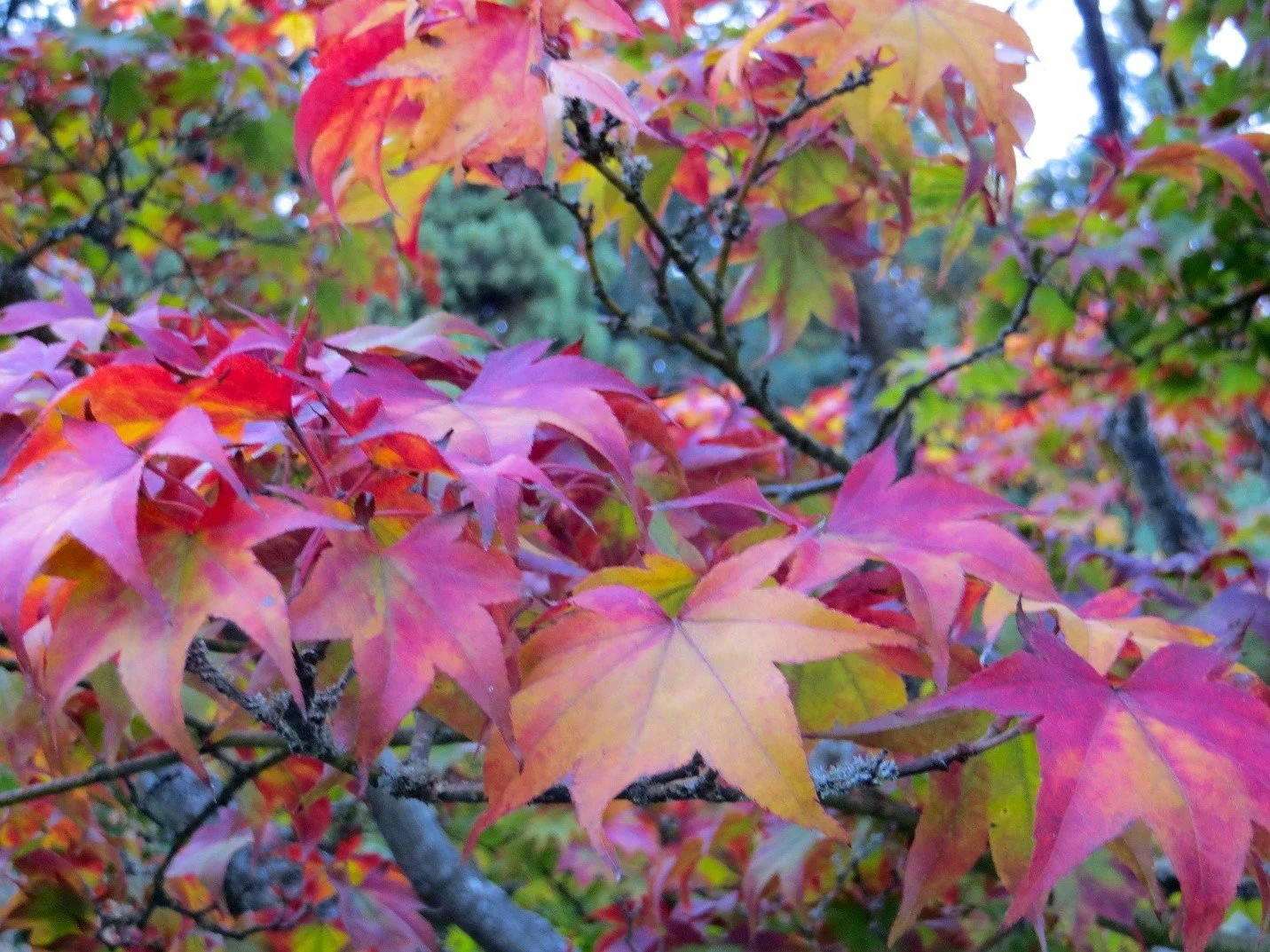
The colorful fall foliage of one of the Garden’s Japanese maples, Acer palmatum ‘Samidare’. (photo: Aleks Monk, October 2013)
Are You an Echo: The Lost Poetry of Misuzu Kaneko, poems written by Misuzu Kaneko; biographical narrative by David Jacobson; translations and editorial contributions by Sally Ito and Michiko Tuboi; illustrations by Toshikado Hajiri (2016; poetry and non-fiction/biography).
A beautifully illustrated picture book, with soulful poems that will appeal to young readers. The poet’s tragic biography, however, is more appropriate for older children, ages 9-14.
The work of Japanese children's poet Misuzu Kaneko (1903-1930) was nearly lost until Setsuo Yazaki, a young Japanese poet, discovered her entire body of work in diaries held by her brother. Yazaki published all 512 poems in 1984, but it was only decades later that her poetry became more widely known. The poem "Are You an Echo?” was included in a public service announcement after the 2011 tsunami, comforting survivors and inspiring nearly one million volunteers to join relief efforts.
This English-language publication—by a writer/biographer, two translator/editors, and one illustrator—includes a Kaneko biography and a small collection of her poetry. Some appear in the original Japanese as well as in translation.
Kaneko’s life was tragic and all too short. When most girls’ education ended in sixth grade, she finished high school and soon after her poems began appearing in children’s magazines. But a terrible marriage and devastating illness led to her suicide at age 26.
According to one reviewer, “Misuzu’s playful images, her thoughtful questions, her empathetic concerns, [are] written with such clarity and simplicity as to be easily accessible to the youngest audiences.” [Smithsonian Asian Pacific American Center, 2016]
And Setsuo Yazaki notes in this volume’s forward:
“Misuzu Kaneko‘s poems are part of every child’s curriculum at Japanese elementary schools…. [and] possess a deep kindness toward all things whether they are alive or inanimate, like rocks and soil…”
Chirri & Chirra, Among the Cherry Blossoms, written and illustrated by Kaya Doi (2025); translated by David Boyd (2026; preschool -G3).***
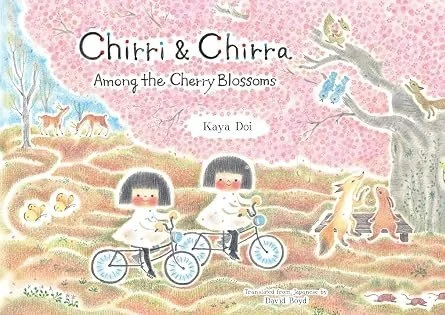
This ninth volume in Doi’s charming series, Chirri & Chirra, Among the Cherry Blossoms, is the enchanted adventure of two young girls who spend the day bicycling together. As described by the publisher, their journey is “filled with delicious food, animal friends, and the beauty of nature.”
Here, Chirri and Chirra come upon a huge flowering cherry tree (sakura in Japanese). After tasting colorful cherry-blossom sweets, they ride into the tree and discover a cherry-themed beauty parlor. Finally, they ride up to the viewing deck, where they drink cherry-blossom tea and experience the magical moment when a gust of wind creates a wonderful shower of cherry petals.
Little Kunoichi: the Ninja Girl, written and illustrated by Sanae Ishida (2015; preschool – G2)
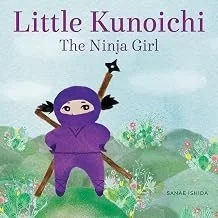
Written and illustrated by Seattle author Ishida, this is a playful story about a young girl training to become a ninja. Little Kunoichi lives in a “super secret” village on a “super secret” island and attends the “Secret Ninja Girl’s School.” But the lessons are challenging and she’s not very successful—until she meets Chibi Samurai, a “very very little” samurai-in-training. He believes in shugyo (“training like crazy”) and practices a lot, though his skill level remains fairly modest. At first, Little Kunoichi just watches him practice, but soon she’s inspired to do the same, and eventually they both feel ready to perform at the annual Island Festival. And there they meet their goal:
Shugyo is the way
The goal: better, not perfect
Practice and have fun
End notes titled "Did you know?" provide Japanese cultural information about traditional games, clothing, ninjas, and words used in the story.
·Love in the Library, written by Maggie Tokuda-Hall and illustrated by Yas Imamura (2022, ages 6-9)

Inspired by the experiences of the author’s Japanese American grandparents, this is a moving story of two young adults’ WWII incarceration at Minidoka camp (Idaho) and how they found each other. As in the other camps, the inhumanity of their imprisonment, lack of privacy, and extreme weather conditions have made life nearly unbearable. Tama, a volunteer librarian there, loves words and books, but even in the library, her frustration, fear and confusion are always with her.
Miraculously, a young man named George is a constant visitor, even though he doesn’t read the books he checks out. Eventually Tama realizes that he visits to see her, and the hopefulness and “improbable joy” of their growing love leads to marriage, and the birth of their first son, while still incarcerated in camp. According to one reviewer:
“Alongside a sensitive introduction to life in Japanese internment camps, this picture book transcends its central romance to encompass love for books, community, and being ‘human.’“ [Publisher’s Weekly]
Peek-a-Boo Haiku: A Lift-the-Flap Book, written by Danna Smith & illustrated by Teagan White (2023; a board book for babies & toddlers).***
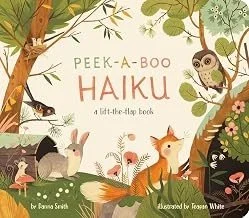
This interactive board book, beautifully illustrated, features charming haiku poems about woodland animals, encouraging readers to guess what animals the poems describe. When they lift each flap, the answer is revealed. Here’s one example:
Cherry blossoms fall
polka-dotted friend dances
on rosy petals
(Peak-a-boo, ladybug!)
FICTION AND NON-FICTION FOR OLDER CHILDREN AND TEENS:
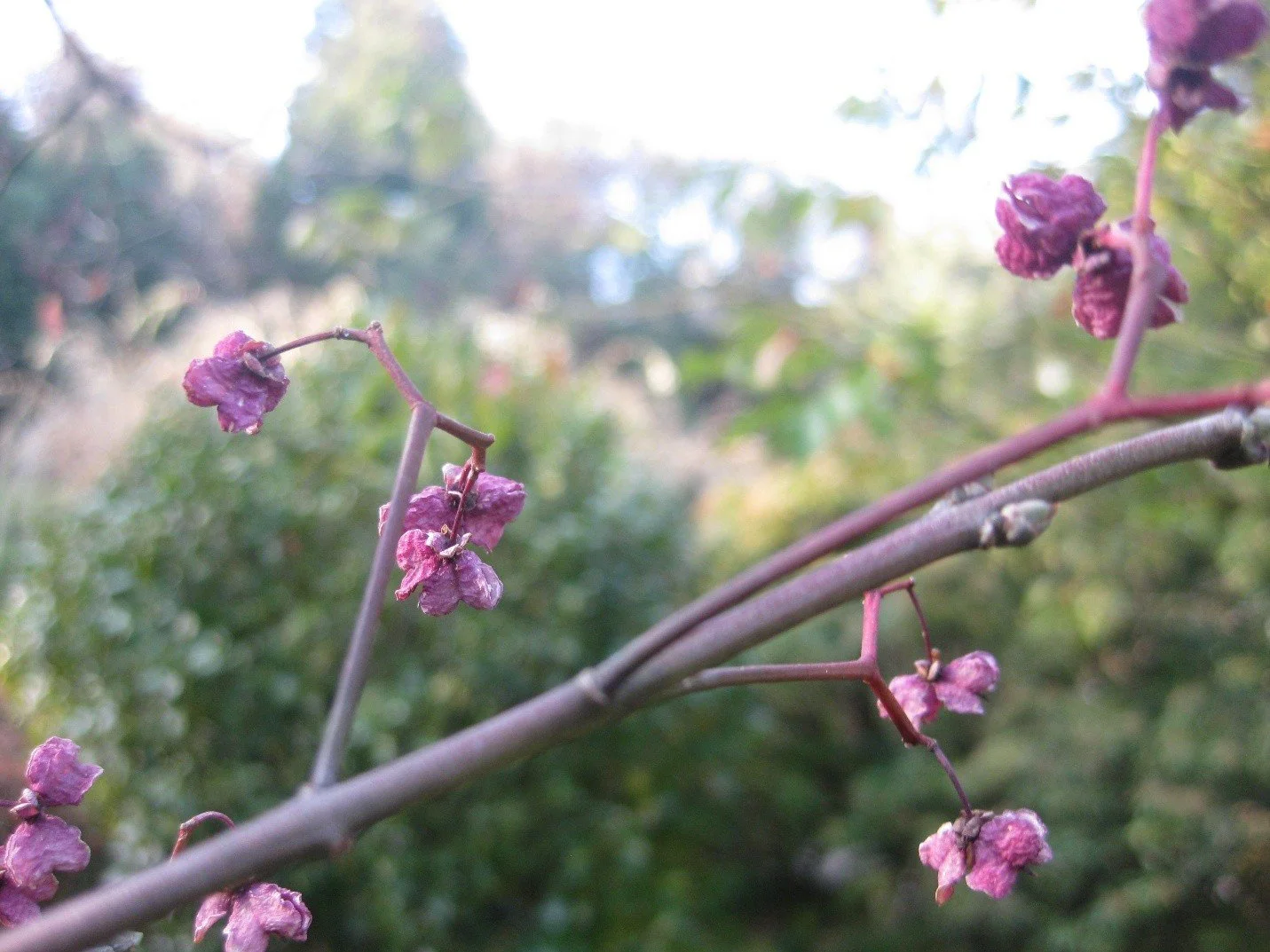
The purplish-pink fruit of Hamilton’s spindle tree, Euonymus hamiltonianus, in the Seattle Japanese Garden. (photo: Aleks Monk, November 2014))
Michi Challenges History: From Farm Girl to Costume Designer to Relentless Seeker of the Truth: The Life of Michi Nishiura Weglyn, by Ken Mochizuki (2023; non-fiction; ages 12-17).
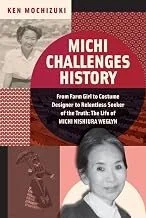
This thoroughly researched and powerful biography was written by local journalist, musician and author Ken Mochizuki (1954-2025), who also wrote the young adult novel of historical fiction, Beacon Hill Boys, set in the Seattle neighborhood where he grew up. Here, Mochizuki chronicles the life of Michi Nishiura Weglyn (1926-1999), a daughter of Japanese immigrants who with her family was imprisoned at age 15 in the WWII incarceration camp at Gila River (Arizona). After the war, she attended college and embarked on a career as a Broadway fashion designer and wardrobe designer for TV personalities.
But in 1968, after hearing U.S. Attorney General Ramsey Clark state on national television that there had never been concentration camps in the United States, Weglyn’s commitment to truth and justice led her to leave her career behind and dedicate herself to eight years of research in libraries and the National Archives. Her goal, exposing the existence of and conditions within the World War II camps, was achieved in 1976, when Years of Infamy: The Untold Story of America’s Concentration Camps was published—and she became a recognized authority in the movement for redress and reparations, including passage of the Civil Liberties Act of 1988, in which the U.S. government admitted that the WWII treatment of Japanese Americans was wrong.
Includes end notes, a selected bibliography, photo credits, and an index.
A Place to Belong, by Cynthia Kadohata (2019; historical fiction; ages 10-14)
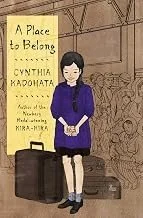
Written by Cynthia Kadohata, an acclaimed author of middle-grade and YA fiction, this historical novel explores a lesser-known consequence of the wartime incarceration. In 1944, the U.S. government passed an act that allowed citizens to voluntarily renounce their U.S. citizenship during times of war. Many incarcerated Japanese Americans felt coerced by the government, chose renunciation, and emigrated to Japan.
This is the storyline of Kadohata’s novel—a third-person narrative of 12-year-old Hanako, her five-year old brother, and their American-born parents. In Japan, they move in with Hanako's paternal grandparents, poor tenant farmers living in a rural area outside Hiroshima. Hanako is hopeful for the future and soon feels a deep, loving bond with her grandparents. But the stark realities of their poverty and life in a country devastated by war, including unrelenting work and insufficient food, is overwhelming. Hanako struggles to decide—should she share food and other necessities with the people she meets, or should she save everything for her family?
Kadohata’s narrative reveals the depth and emotional complexity of Hanako’s struggle to understand what it means to be good and how to belong in a place where she isn’t welcome. According to one review, this is a “powerful and joyful work. Hanako's philosophical awakening goes much deeper than the caught-between-cultures dilemma that the title implies.” [Publisher’s Weekly]
An afterword provides additional details about the internment, legal efforts to restore citizenship to those who had renounced it, and post-war land reforms in Japan that improved the lives of tenant farmers.
Tea Ceremony: Explore the Unique Japanese Tradition of Sharing Tea, written by Shozo Sato, with assistance from Alice Ogura Sato (2005; non-fiction; ages 7-12)
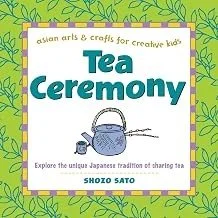
Children interested in Japanese culture and incorporating elements of it into their own lives will enjoy this handbook, the second book in the series “Asian Arts & Crafts for Creative Kids.” It includes a short introduction to Japanese culture and the history of the tea ceremony, followed by text and full-color photographs of the types of tea, the tearoom and tea garden (roji), and the utensils used in the tea ceremony (tray, bowls, tea container and scoop, whisk, and various special cloths).
Each project/chapter includes step-by-step instructions, clearly illustrated with photos, showing how to perform an authentic Japanese tea ceremony:1) Setting up the tearoom; 2) Starting the tea ceremony; 3) Preparing the tea bowl and whisk; 4) Making the tea; and 5) Completing the tea ceremony. Likely more meaningful to contemporary young people, each chapter concludes with “What to Do at Home,” a page of adaptations for performing the ceremony at home—more simply, but retaining the “spirit of the tea ceremony [that] is the essence of Japanese culture.”
Another book in this series, Ikebana (2004), was written by the same authors.
FICTION AND NON-FICTION FOR ADULTS AND MATURE TEENS:
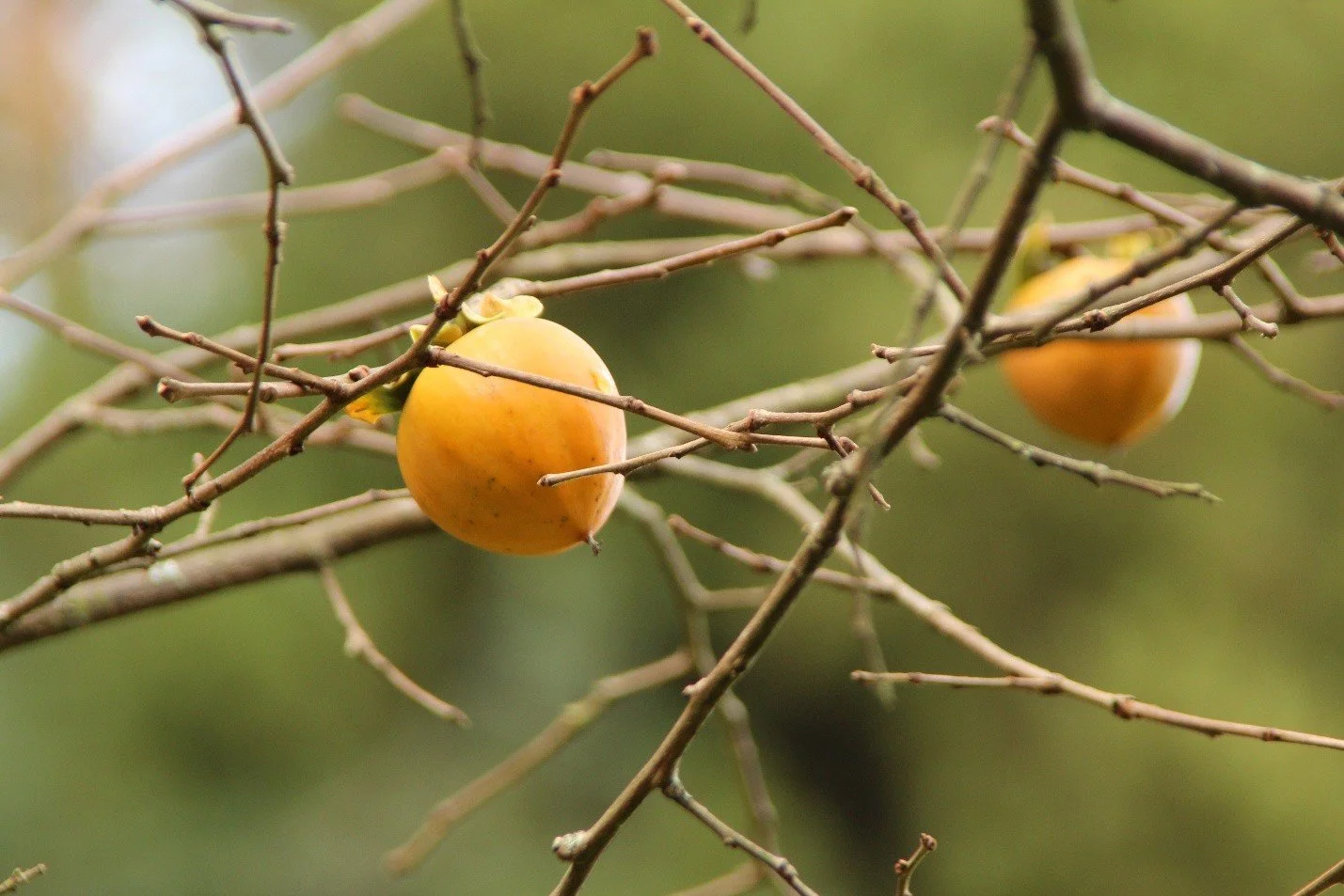
The “divine fruits” of persimmon, Diospyros kaki, in the Seattle Japanese Garden. (photo: Mary Ann Cahill)
Dead-End Memories: Stories, written by Banana Yoshimoto (2003; fiction); translated by Asa Yoneda (2022).
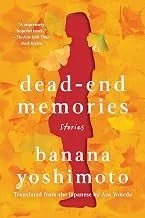
It took nearly two decades for this 2003 Japanese short story collection to be published in English translation. A slender volume, it includes five stories about young Japanese women who experience betrayal, misfortune and grief, forcing them to reflect on their memories and future dreams. Yoshimoto has stated that Dead-End-Memories is the “most precious work of my writing career.”
In "House of Ghosts," a restaurant owner’s daughter spends time with a friend in his dilapidated apartment and encounters ghosts of the previous inhabitants, who haven’t noticed that they’re no longer alive. In “Mama!,” a book editor raised by her grandparents is the victim of intentional food poisoning. During a long recovery, she reflects on her life and relationships, including memories of the birth mother who disappeared when she was very young. In “Not Warm at All,” a writer reflects on a close childhood friend who was drawn to the “glow of [her] soul.” Tragically, he meets a terrible death before reaching adulthood. In "Tomo-chan's Happiness," an office worker who was abandoned by her father and sexually assaulted at sixteen opens to the possibility of finding a loving relationship. In the title story, “Dead-End Memories,” a woman discovers that her fiancé has betrayed her but finds healing and hope from an empowering friendship while living briefly in an apartment above her uncle’s bar.
One reviewer notes that some Western critics call Yoshimoto’s writing “superficial and simplistic.” Disagreeing, she describes these stories as “evanescent.” [website of novelist Leslie Krueger]
On the one hand, Yoshimoto’s stories feel gentle and comforting, with ordinary events and small, peaceful moments. “All of her protagonists are ultimately changed irrevocably by kindnesses—from others, from the natural world, from themselves—that lead them on paths toward the light.” [Kirkus Reviews]
On the other hand, Yoshimoto’s metaphor comparing a river to the flow of time feels dark and disturbing:
A river is a strange thing. It invariably harbors a quality of menace that can make your hair stand on end. Even on clear days, when the water flowed smoothly and the sunlight glinted off the shallows and made the plants on the bank sparkle, I always felt that the river was somehow connected to something dark, deep and frightening.”
Each story beautifully captures the essence of mono no aware—the fleeting nature of all things—revealing how central transience is to Japanese culture and our own Seattle Japanese Garden.
Design Traditions for Your Garden, a Brooklyn Botanic Garden handbook, guest-edited by Patricia Jonas (2001; non-fiction).***
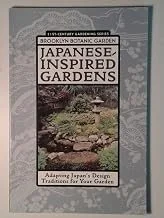
A concise and very useful 111-page handbook for people interested in creating their own Japanese-inspired gardens. Its emphasis—on understanding and implementing essential Japanese principles and practices instead of relying on stereotypical Japanese elements (stone lanterns, bridges, etc.)—increases its relevance for contemporary gardeners.
This volume brings together contributions from six Japanese garden authorities—Patricia Jonas (“Introduction: Japanese Inspirations”), David Slawson (“Authenticity of Japanese Landscape Design”), Marc Peter Keane (“The Garden Path as a Journey”), David Harris Engel (“Rocks in the Japanese Inspired Garden”), Judy Glattstein (“Water in the Japanese Garden Style”), and Douglas M. Roth (“Pruning Trees and Shrubs”).
Also includes a chapter on recommended plants, including plants native to Japan and to the U.S. (primarily East Coast natives).
A Place for What We Lose: A Daughter’s Return to Tule Lake, by Tamiko Nimura (2026; non-fiction/memoir).
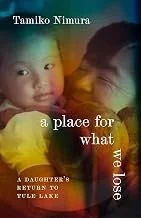
In this deeply moving memoir of intergenerational trauma, Tamiko Nimura weaves together historical research, excerpts from the unpublished manuscript of her second-generation Nisei father about his four-year childhood incarceration at Tule Lake, and her own Sansei (third-generation Japanese American) memories and reflections.
Tule Lake camp in Northern California was the largest of our country’s 10 WWII incarceration camps. In response to a poorly worded and disturbing loyalty questionnaire, Tule Lake had the largest number of answers that the government considered “disloyal,” so it mandated that “disloyal” people from the other nine centers would be sent to Tule Lake, segregating them from those viewed as “loyal” and leading to the camp’s extreme militarization.
Taku Nimura died in 1984, when Tomiko was 10; her narrative includes memories of her father, of reading his manuscript as a child and much later as an adult, and of joining a 2014 pilgrimage from Tacoma to Tule Lake. Little remained other than the latrine’s concrete foundation and a small concrete jail, built by the prisoners.
At a nearby museum, she viewed a reprinted directory with the names of all arrivals and departures. The number of names was overwhelming, reminding her of the Vietnam Veterans Memorial. Discovering her family members’ names and touching them was “an electrifying act:”
“In this moment I am the present touching the past. I am the future these names hoped and wished for. I was born because they returned from this place of dust. I am returning even though I have never been here.”
In the words of the book’s publisher, A Place for What We Lose “reckons with the psychological and emotional legacy of wartime incarceration while exploring both the possibilities and the limits of healing.” And according to a UW review:
“She engages with those traumatic histories as acts of love, resilience and reckoning.” [University of Washington Magazine]
Corinne Kennedy is a Garden Guide, frequent contributor to the Seattle Japanese Garden blog, and retired garden designer.